In recent years, the world has been heavily impacted by 2 major waves that have and will continue to change the business environment for years to come. On the one, organizations, both public and private are finally awoken to the fact that it actually makes business sense to put the customer at the center of all processes and work relentlessly to meet their needs in real time. On the other hand, recent technological advances and engineering have made it possible to transform business operations in ways that were impossible only a new short years ago. The combined effect of customer centricity and rapid technological change and adoption has dramatically changed the way companies do business as well as the competitive landscape. In only a few short years, we have seen companies like Blockbuster disappear altogether while Netflix now comfortably sits in its place. RIM, the company that made Blackberry the reference equipment for mobile telephony quickly saw its market share and profits scooped up by Apple and other more agile and nimble players. What really happened?
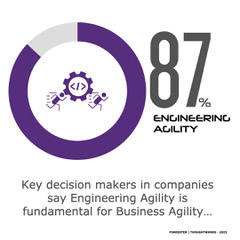
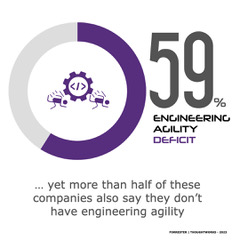
The Netflixes and Apples that today dominate the business landscape were more technology-facing and realized early on, that those who did not take customer needs and wants really to the core would eventually lose market share and profitability because new technology was increasingly pushing purchase decision power squarely into the hands of these customers, and in near real-time. This meant that with a click of a button or a tape of the finger, customers could very quickly and easily switch to nearby vendors and source elsewhere if a company did not meet their demands fast enough. Business agility, the capability to pivot in near real-time to meet the ever-changing expectations of the customer had become the competitive advantage. Being able to make sense of the complex business landscape and adjust or even completely revamp business processes and operations in the shortest time possible but without compromising on quality and security, had become the gold standard. Most companies fell behind as business and/or digital transformation took center stage in key boardroom discussions. Those that survived and indeed succeeded in thriving, quickly discovered that at the root of business agility in an increasingly technology-driven world, was engineering effectiveness. In a recent survey carried out by ThoughtWorks, 87% of the decision-makers interviewed said engineering effectiveness was the basis of business agility. More than half of them (59%), also regretted that their engineering teams were agile enough. IT, which traditionally took on a support role in organizations’ operations has in a sense become the key engine driving it. Engineering effectiveness depends on engineering agility, which itself is propped by 3 key drivers.
Engineering Alignment: The companies at the vanguard of the tech-enabled customer-centricity wave that is sweeping the world ensure that their software engineering teams’ strategies and processes, especially in the software development lifecycle are nimble, continuously adapting and operating in short iterations that match the constant changes in the business environment and customer position. In the ThoughtWorks survey, more than 70% of those interviewed said aligning software development priorities with business strategy, ensuring software engineering agility keeps up with business agility needs, and creating more cross-functional teams were fundamental factors for leveraging this alignment.
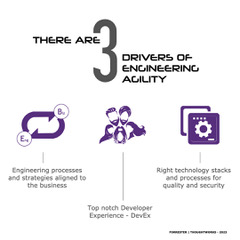
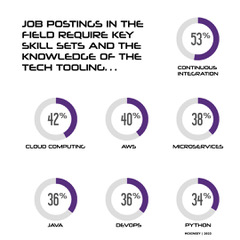
People: Without the right talent in quantity and with the right skill set, most companies struggle to keep up with the changing demands of the business environment. Attracting, developing, and keeping the right talent has now become a keystone for driving business agility. The acute shortage of talent in the global market has also made things worse by overburdening software engineering teams, sometimes even resulting in engineers quitting for lack of a psychologically safe working environment. The 2023 outlook by Mckinsey & Company, indicates that while the demand for new skill sets like continuous integration (53%), DevOps (36%), and cloud computing (42%) has risen in job postings related to the field, the ratio of positions filled relative to market demand was less than 50% in all but 2 (python and cloud computing) of the skills investigated.

Technology and processes: Equipping software engineers with the right tools to deliver rapidly without compromising on high quality and security needs to be ensured by tech stacks and agile processes. Improving software security, automating testing, linking new technologies with legacy systems, and ensuring smooth functioning are only some of the elements companies have to work on in this domain.
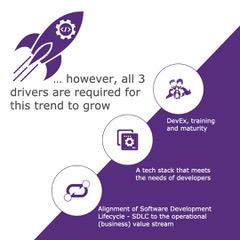
Which companies actually get to making engineering effectiveness truly a game changer for business agility will depend on how these 3 drivers are addressed, combined, and leveraged for the best business outcomes. Until now, companies have put heavy emphasis on the technology stacks as a way of overcoming their limitations. But increasingly, most are realizing that only by going back to the basics of customer centricity enabled by technology will they make good on their investments and this entails carefully managed alignment with software engineering teams as well as creating and upholding the best developer experience to attract, develop and retain the best people.
#devops #engineeringagility #softwareengineering #ulabsinternational